
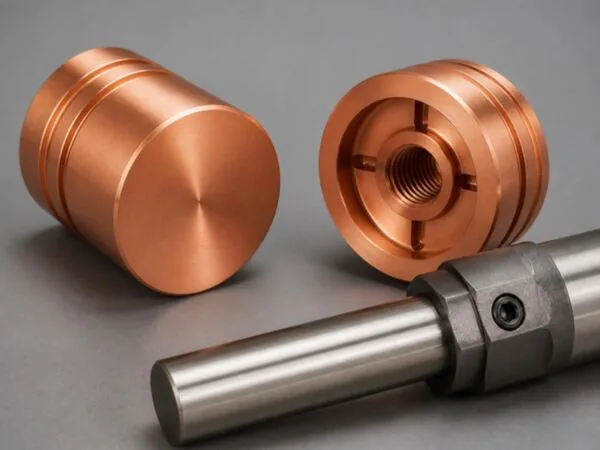

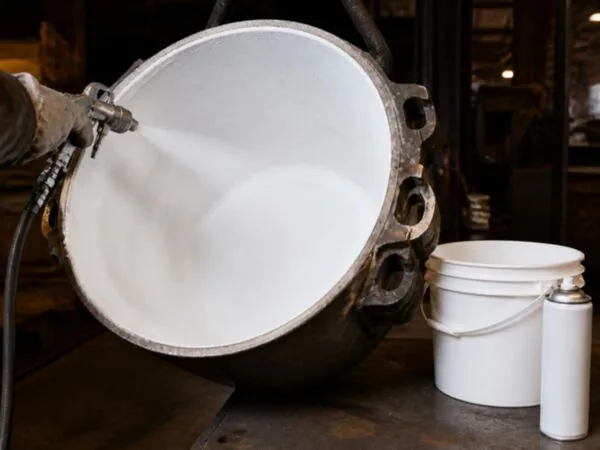
Boron Nitride Coating
Non-wetting BN coating for ladles, troughs, thermocouples and molds
View detailsDie release agents and plunger lubrication beads for HPDC
Die release agents sprayed on the die between shots to release the casting and protect the die surface, and plunger lubrication beads that protect the tip and shot sleeve in cold chamber machines. These two are the industry standard: release agents are mostly water-based dilutable emulsions, and beads are wax carrying graphite or white pigments. We source by alloy, machine and dosing system.

With this information we can ask the right factories and come back with a proposal that fits your process. Missing something? Send what you have: we fill the gaps together.
Request a Quote Printable checklist to fill with your plant teamWe reply in English, Spanish, Italian or Chinese.
Need something different? We adapt sizes, materials and specs to your drawing.
Beads dose dry with little residue and can be dispensed automatically, which is why they are the industry standard for plunger lubrication.
Yes. If the lubricant breaks down at higher metal temperatures, aluminium can enter the tip-to-sleeve gap and erode the tip.
Non-wetting BN coating for ladles, troughs, thermocouples and molds
View details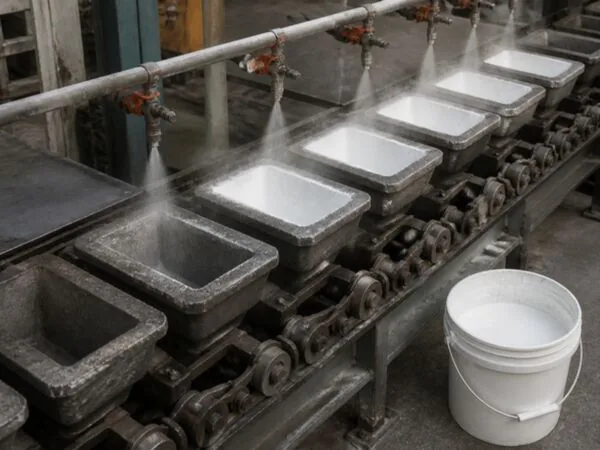
Boron nitride release coating that protects ingot molds and eases ingot release
View details
Fibreglass mesh, socks and bags for filtering molten aluminium
View detailsAccessibility
No product matches that search. We source to your specification: tell us what you need.
One request, one supplier, one shipment. No prices: we quote to your spec.
Request a quote Printable RFQ sheet